


Idle Pocket Crafter 2
Iron Horse Games LLC
I spent time with Idle Pocket Crafter 2 as a small, low-pressure adventure game built around mining, crafting, and returning to improve your progress. It comes from Iron Horse Games LLC, is free to start, and is aimed at players who enjoy watching a simple production loop grow without needing constant attention. The basic appeal is easy to understand: send your effort into mining, turn what you collect into useful crafted progress, then come back and repeat the cycle.
That simplicity is also the reason to approach it with the right expectations. This is not the kind of adventure game I would choose for a dramatic story, demanding combat, or a large world to explore manually. Its pleasure comes from gradual improvement and short check-ins. If that sounds relaxing rather than limited, it has a clear place on an Android device. If you want every minute to bring a new challenge, the idle structure may feel too restrained.
How the mining-and-crafting loop feels in everyday play
The game’s central rhythm is deliberately repetitive. Mining gives the activity its forward motion, while crafting provides a reason to keep gathering and improving. I found that the best way to approach it was not to expect a long session. It works better as something I open between other tasks, make a few decisions, collect progress, and leave again.
A realistic use case is a short break during the day. I might open the game while waiting for a download, check what the current mining effort has produced, use the available materials for crafting, and set up the next step before putting the phone away. That makes the idle design practical: it does not demand the same uninterrupted attention as a conventional adventure title.
The trade-off is that repetition is not a side feature here; it is the foundation. The satisfaction depends on enjoying small gains. Players who like optimizing a routine can find that calming, especially when they are happy to improve gradually instead of chasing a dramatic payoff. Players who need frequent surprises may feel that mining and crafting become familiar too quickly.
Related News






I also recommend treating the crafting screen as a planning tool rather than spending materials immediately. Before committing resources, I would look at what the next useful improvement requires and keep a small reserve when possible. That habit makes the loop feel more deliberate and reduces the frustration of reaching a useful option without enough materials to act on it.
What free access really means
The game can be downloaded and played for free, which is important for this particular genre. You can test the core loop without paying an entry fee and decide whether its pace suits you. That makes it easier to recommend as a low-risk experiment for someone who already enjoys incremental games.
There are in-app purchases, with individual items ranging from forty-nine cents to thirty-nine dollars and ninety-nine cents. That range matters because “free” describes access, not necessarily every possible shortcut or optional purchase. I would begin without spending anything, learn how quickly the normal loop feels, and only then decide whether an optional item adds enough value for my own play style.
Gallery
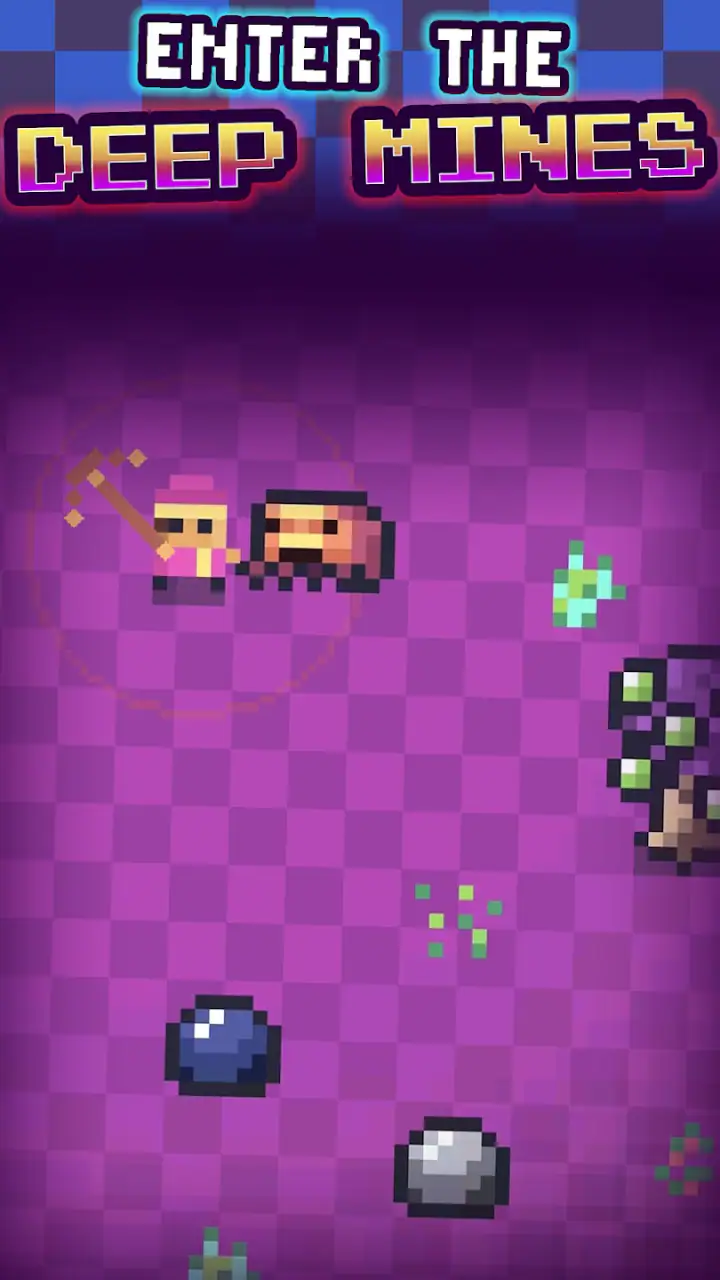
I would be especially careful not to treat the largest purchase as automatically better value. In an idle game, spending more can reduce the very waiting and gradual planning that create the appeal. A small purchase, if someone chooses to make one, is easier to evaluate against a specific annoyance. The larger option only makes sense for a player who already knows they want to commit heavily to this particular experience.
The honest value proposition is therefore straightforward: the free entry lets you sample the mining-and-crafting routine, while paid items are a personal choice rather than a reason to install. I would not recommend spending money before confirming that the repeated progression remains enjoyable after the initial novelty fades.
Where the game delivers value without demanding attention
Its strongest value is convenience. Many adventure games ask me to stay alert, move through spaces, react quickly, or follow a long sequence of objectives. This one is better suited to fragmented attention. I can make progress in short visits, which is useful when I want a game that fits around a commute, a lunch break, or an evening when I do not have the energy for something demanding.
Another strength is the clear connection between the main activities. Mining is not presented as an isolated task; it feeds the crafting side, and crafting gives the collected materials a purpose. That relationship helps the game avoid feeling like a completely empty timer. Even when the actions are simple, I still have a reason to consider what I want to gather and how I want to use it.
A less obvious benefit is that the game can work as a mood reset. I would not use it when I want intense entertainment, but I can see myself opening it after a busy stretch because it offers a predictable sequence. The lack of pressure is valuable for players who enjoy games as a quiet habit rather than a test of skill.
It is also approachable for people who are new to incremental games. The theme gives the progression an understandable shape: resources come from mining, and crafting turns that effort into further progress. Someone who finds abstract number-based idle games difficult to connect with may find this setting easier to follow.
Trade-offs that become clearer after longer sessions
The same loop that makes the game accessible can limit its appeal. Once I understand the basic routine, the question becomes whether the next improvement feels meaningful enough to justify another check-in. If the answer is no, the game can start to resemble maintenance rather than adventure.
This is where it differs from a more traditional adventure game. A conventional title usually rewards active exploration, story discovery, or skillful encounters. Idle Pocket Crafter 2 places more weight on patience and planning. I would not install it expecting the sense of discovery that comes from uncovering a large map or solving a demanding sequence of puzzles.
It also differs from a competitive incremental game. There is no reason in the basic concept to approach it as a race against other players. Its value is personal progression, so anyone looking for leaderboards, social pressure, or a strong competitive target should consider a different category of game.
The purchase structure is another trade-off. Free access is a genuine advantage, but the presence of optional items means players who are sensitive to spending prompts should set a personal rule before playing. My rule would be simple: enjoy the free loop first, avoid buying merely to remove ordinary waiting, and only consider a purchase when I can name the exact improvement I want.
Storage and attention are also worth considering in practical terms. A game designed for repeated check-ins can become part of a daily phone routine, which is convenient but not always desirable. If I already have several idle games competing for attention, adding another one may create more digital housekeeping rather than relaxation.
Small strategies that make the loop more satisfying
My first practical tip is to use sessions for decisions, not constant supervision. Open the game with a purpose: collect results, check the next crafting goal, adjust the plan, and leave. Repeatedly checking without changing anything adds little value and can make the experience feel slower than it is.
Second, I would separate immediate progress from longer-term preparation. Spend enough materials to keep the current cycle moving, but avoid emptying every reserve if a more useful crafting step is close. This gives the mining activity a clear target and makes each return more purposeful.
Third, judge purchases by time saved versus enjoyment removed. If waiting is the part I dislike, an optional item may seem attractive, but removing all waiting can also remove the anticipation that makes incremental progress satisfying. The best decision depends on whether I want a calmer routine or a faster route through it.
Finally, I would play it in rotation with a more active game rather than expecting it to cover every mood. A short mining session can work well between demanding games, while a story adventure or action title is a better choice when I want to feel directly involved. This combination makes the idle format feel like a useful complement instead of a replacement for everything else.
Who is likely to get the most from it
I think the best audience is someone who enjoys gradual progress, light resource planning, and games that can be checked briefly. It suits players who like seeing a routine become more productive over time, especially when they prefer a relaxed adventure theme to a purely abstract idle interface.
It is also a reasonable choice for a casual player who does not want to learn a complicated control system. The mining and crafting premise is easy to understand, and the free entry makes trying it less of a commitment. The Everyone 10+ content rating places it within a broad family-friendly range, so it can appeal beyond the usual audience for intense action games.
The public response is encouraging without being overwhelming: it holds a 4.4 average from around 387 ratings, and the game has passed 100,000 installs. I read that as evidence that the concept is connecting with a real audience, but not as a guarantee that its slow, repetitive structure will suit everyone. Ratings can tell me that players are engaging with it; my own tolerance for idle pacing still matters more.
The current version is 1.3.402, and it requires Android 6.0 or newer. Those details make it accessible to many Android users, including people who are not using the newest phone. I would still check that my device meets the requirement before planning to make it a regular game, particularly if I rely on an older handset.
Who should choose something else
I would skip this game if my main reason for installing an adventure title is story. Mining and crafting may provide a setting and a progression framework, but they do not replace character-driven writing or carefully staged exploration. A narrative adventure would be a better fit for a player who wants memorable scenes and a clear ending.
I would also look elsewhere if I want direct control every second. Traditional action-adventure games provide more immediate feedback because my movement, timing, and choices directly shape what happens. Here, the appeal is letting the progression continue between visits, so the player’s role is more about managing the process than performing every action.
It may not suit someone who dislikes in-app purchases on principle. The game is free to start, but optional items are part of the commercial model, and their prices extend from a low-cost item to a much larger purchase. Even without buying anything, a player who finds purchase options distracting may have a more comfortable experience with a fully paid game.
It is also not my first recommendation for a person who wants deep strategic complexity. There is planning in deciding what to gather and craft, but the design is built around a relaxing repeatable routine. A dedicated strategy game will offer more layered systems, while this title keeps the decisions lighter and easier to fit into a busy day.
My buy-or-skip verdict
I recommend trying it for free if you want a gentle Android adventure game that turns mining and crafting into a series of short progress checks. Its value is clearest when I let it remain a small part of my routine rather than demanding that it provide constant excitement. The free starting point gives curious players a fair way to test that fit.
I would not recommend buying an in-app item immediately. First, play long enough to decide whether the normal rhythm is enjoyable, then connect any possible purchase to a specific need. The available purchase range is wide, so careful spending matters more than assuming that a higher-priced option delivers better personal value.
My final view is positive but specific: this is a good choice for relaxed incremental progression with a mining-and-crafting identity, not a substitute for a full-scale adventure. Iron Horse Games LLC has shaped it for players who enjoy returning to a growing routine, and that routine is the reason to install it. If you like quiet progress, start free and keep your expectations modest. If you want story, action, or constant discovery, skip it and choose a more active adventure instead.
FAQs for Idle Pocket Crafter 2
What is Idle Pocket Crafter 2, and how does its gameplay work?
Idle Pocket Crafter 2 is an incremental crafting and adventure game built around gathering resources, creating items, improving equipment, and progressing through increasingly challenging areas. Much of the resource collection continues while you are away, so you can return to claim rewards and upgrade your character. The experience is designed for short sessions, although active play helps optimize production and exploration.
Can I play Idle Pocket Crafter 2 without an internet connection?
The game may allow some progress and basic activities while offline, but the exact functionality can depend on the current version, device, and how the game handles account synchronization. Online access may still be required for advertisements, cloud saves, updates, events, or purchases. Before relying on offline play, it is worth testing the game in airplane mode and confirming that your progress is saved correctly.
Does Idle Pocket Crafter 2 include advertisements or in-app purchases?
Idle Pocket Crafter 2 can use optional advertisements and in-app purchases as part of its monetization system. Ads may provide bonuses such as extra resources, faster production, or additional rewards, while purchases can accelerate progress or unlock convenience features. You can generally play without spending money, but free players should expect a slower pace and should review the store descriptions before buying anything.
Is Idle Pocket Crafter 2 suitable for children and younger players?
The game is generally approachable because its controls and progression systems are easy to understand, making it suitable for players who enjoy relaxed crafting and idle mechanics. However, parents should check the age rating, advertising content, chat or social functions if available, and the presence of in-app purchases. Device-level purchase restrictions are recommended, especially when children use a shared phone or tablet.
What should I know before downloading Idle Pocket Crafter 2?
Before downloading, make sure your Android or iOS device meets the current requirements and has enough free storage for the installation and future updates. Idle games often rely on repeated upgrades and timers, so players looking for fast, action-heavy gameplay may find the pace slow. Also check whether cloud saving is supported, because uninstalling the app or changing devices could otherwise risk local progress.
Pros
- Simple idle gameplay that works well for short
- casual sessions.
- Progress continues while you are away from the game.
- Crafting and upgrading provide clear long-term goals.
- Relaxing presentation makes it easy to play without pressure.
- Suitable for players who prefer low-effort progression.
Cons
- Progress may feel repetitive after extended play sessions.
- Some upgrades can require considerable waiting or grinding.
- The idle mechanics offer limited control over active gameplay.
- Ads or in-app purchases may affect the pace of progression.
- Long-term variety may not satisfy players seeking deeper strategy.


